



- 5.0
The Highest-rated Car Rental Provider
The Highest-rated Car Rental Provider

Written By
Updated On 19 Aug 2026
Medical and patient transport in Delhi NCR should meet a few core safety standards: trained personnel who understand basic patient handling for bed-to-bed transfers, genuinely wheelchair accessible vehicles, calmer and more careful driving practices than standard corporate transport, and clear coordination protocols with hospital international patient departments. Providers who cannot speak specifically to each of these are generally not equipped for this segment, regardless of how polished their general transport service looks. This question often comes up alongside a related one, what is diplomatic protocol transportation and how does it work in India, since both segments share a common thread, they demand specialised training that goes well beyond standard corporate chauffeur skills. Just as diplomatic transport requires chauffeurs briefed on protocol and security awareness, medical transport requires drivers briefed on patient comfort, careful handling, and situational calm during what is often a stressful journey for the patient and their family.
A patient being moved from a hospital bed to a vehicle, or from a vehicle back to a hospital bed, needs handling that a standard driver is simply not trained for. This includes understanding how to assist with mobility limitations, supporting any medical equipment that needs to travel with the patient, and moving at a pace that prioritises the patient's comfort over speed. Providers offering corporate cab services in delhi ncr for hospital partnerships need a distinctly different driver training track for this segment compared to routine corporate bookings.
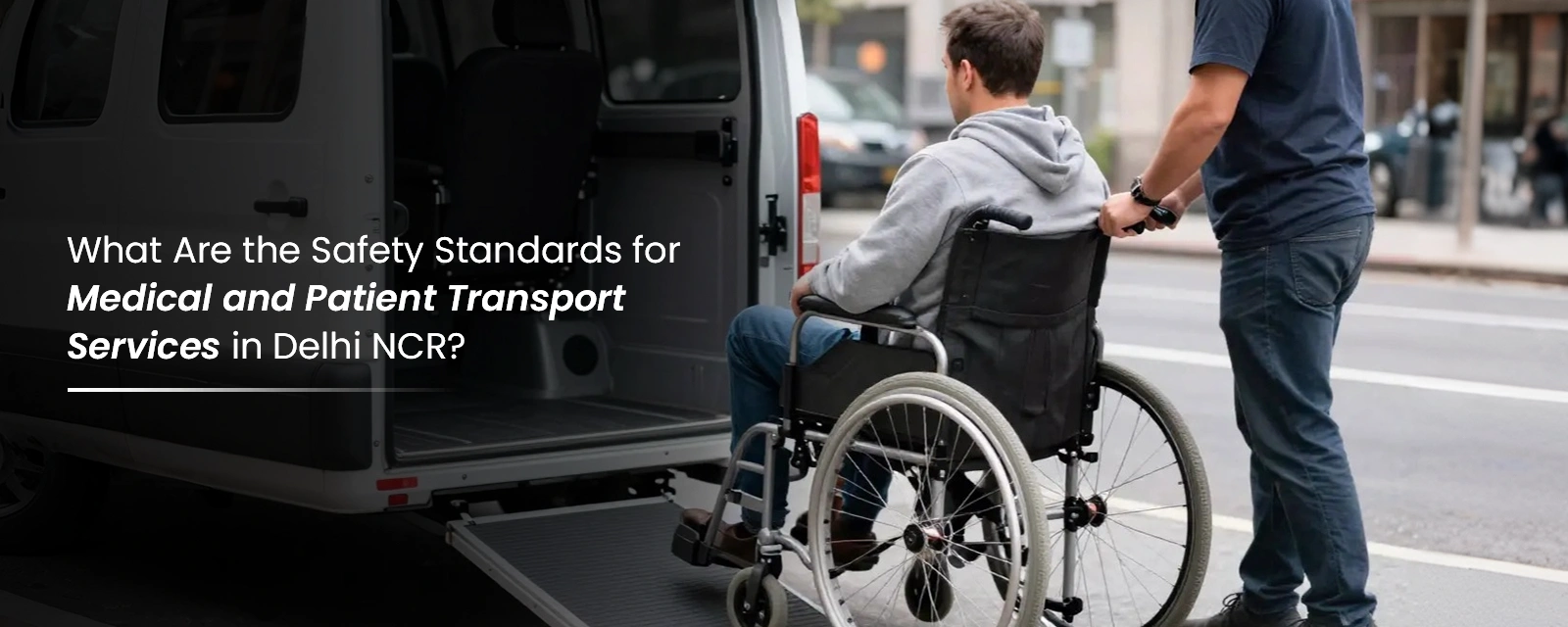
A vehicle marked wheelchair accessible on a booking form needs to actually accommodate a wheelchair comfortably, with adequate space, secure fastening options, and a driver who knows how to assist with loading and unloading safely. Hospitals and international patient coordinators should verify this directly with a provider rather than assuming every vehicle in a fleet meets this standard by default.
A patient who is post-surgical, in pain, or requiring monitoring equipment during transit needs a noticeably gentler driving style than a standard corporate passenger. Sudden braking, sharp turns, or aggressive lane changes that a healthy business traveller would barely notice can genuinely affect a recovering patient's comfort and, in some cases, their medical condition. Drivers assigned to medical transfers need specific briefing on this, not just a general instruction to drive safely.
Most large Delhi NCR hospitals run dedicated international patient services departments handling visa assistance, translator coordination, and accommodation alongside medical care. Transport works best when integrated directly with this department rather than booked separately by a family member navigating an unfamiliar system for the first time. A transport partner with an established hospital relationship can pre-schedule discharge transfers and coordinate directly if a procedure timing shifts.
Patients rarely travel alone, and the accompanying family member is often anxious and unfamiliar with the city. Clear communication about timing, availability by phone, and never leaving anyone waiting without an update shapes how the entire medical trip is remembered, often more than the medical procedure itself once time has passed.
IP Travel Lines has structured part of its fleet and driver training specifically around medical transport because generic corporate protocols simply do not translate to patient needs. A driver trained for punctual executive pickups is not automatically equipped for gentle, patient-centred transport, and treating the two as interchangeable is where many providers fall short in this segment. Hospitals and international patient coordinators evaluating a transport partner should ask directly about this distinction rather than assuming general transport experience automatically covers it.
Beyond routine transfers, a genuinely safety-focused medical transport provider should have a clear protocol for what happens if a patient's condition changes unexpectedly during transit, basic first aid awareness among drivers, a direct line to emergency services, and clarity on which nearby hospitals can be reached quickest from any given route. This is not something every general transport vendor thinks to prepare for, but for a provider serious about the medical tourism and patient transfer segment, it should be a standard part of driver briefing rather than an afterthought only considered once something has already gone wrong.
International patients and their families often arrive with limited familiarity with local healthcare processes, so a transport provider working closely with hospitals should be comfortable handling basic documentation coordination, confirming pickup details against hospital admission records, verifying passport and travel document information where relevant, and ensuring drivers have accurate contact information for both the patient's family and the hospital's coordinating staff. None of this is complicated in isolation, but getting all of it right consistently is what separates a provider who occasionally handles medical transfers from one who has genuinely built this into a repeatable, reliable process. Providers who treat this coordination seriously reduce the chances of miscommunication at exactly the moments when clarity matters most.
Quick Booking Form

A car is an unusual kind of confidential space, private enough that executives s...
previous post
The rule of thumb most experienced transport planners use is roughly one vehicle...
next postDrivers need specific training in bed-to-bed handling, supporting mobility limitations, and accommodating any medical equipment travelling with the patient.
By confirming directly with the provider that the vehicle has adequate space, secure fastening, and a driver trained to assist with safe loading and unloading.
Post-surgical or unwell patients are more sensitive to sudden movements, so a gentler driving approach is essential compared to standard corporate transport.
Ideall through the hospital's international patient department directly, allowing pre-scheduled transfers and real-time coordination if procedure timing shifts.
Anxious family members accompanying patients benefit from clear, proactive communication, which significantly shapes the overall experience of an already stressful trip. Providers who train for this consistently see better satisfaction outcomes reported back through hospital feedback channels.
 28 Sep 2026 | by IP Travels Lines
The Hidden Cost of Unreliable Executive ...
The direct cost of corporate cab services shows up clearly on an invoice. The indirect cost of unrel...
Read Full Blog 24 Sep 2026 | by IP Travels Lines
Corporate Chauffeur Service vs Ride-Hail...
A dedicated corporate chauffeur service offers trained, vetted chauffeurs with account-level account...
Read Full Blog 24 Sep 2026 | by IP Travels Lines
How to Book a Chauffeur-Driven Car for a...
Booking transport for a visiting CEO or foreign delegate starts with sharing the full itinerary and ...
Read Full BlogSeamless Travel Solutions for Your Business. Let's Connect.



Seamless Travel Solutions for Your Business. Let's Connect.
Seamless Travel Solutions for Your Business. Let's Connect.