



- 5.0
The Highest-rated Car Rental Provider
The Highest-rated Car Rental Provider

Written By
Updated On 25 Jul 2026
Learn the key differences between an executive chauffeur and a regular cab driver, and discover which option is best for professional business travel.
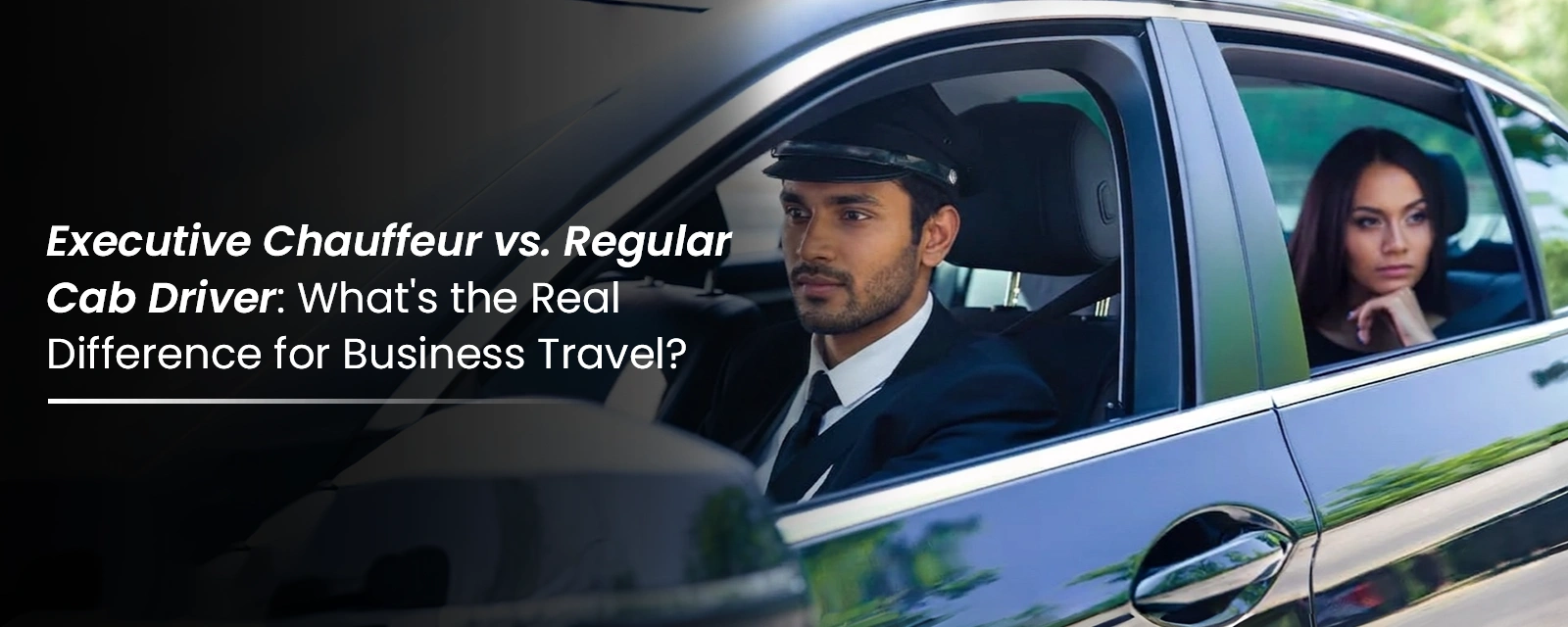
The real difference between an executive chauffeur and a regular cab driver comes down to training, employment structure, and accountability. Executive chauffeurs are typically directly employed, professionally trained in business etiquette, discretion, and luggage handling, and held to consistent service standards. Regular cab drivers, often independent contractors or gig-platform workers, aren't trained for the specific demands of business travel and vary widely in professionalism.
Both can technically get you from the airport to the office. Only one is actually built for business travel specifically.
To understand what is the difference between corporate car rental and regular cab at a broader level, it helps to look beyond just the driver. Corporate car rental typically includes a maintained, newer fleet, transparent contract pricing without surge charges, dedicated account management, and consistent chauffeur standards. Regular cabs, whether app-based or street-hailed, optimize for availability and price, not consistency or business-specific service quality.
A professionally trained chauffeur understands things that never appear in a regular driving test. How to handle a laptop bag without slinging it carelessly. When to make conversation and when to stay silent, particularly during a call that shouldn't be overheard. How to manage a delayed flight without visibly stressing the passenger. Basic protocol around discretion when sensitive business conversations happen in the vehicle.
Regular cab drivers, even courteous and skilled ones, simply haven't received this specific training, because it's not what their role requires.
Chauffeur Rental service providers that directly employ their chauffeurs can enforce consistent standards, conduct thorough background checks, and hold drivers accountable to a company reputation, not just an app rating. Regular cab drivers, especially on gig platforms, are typically independent contractors with far less oversight and consistency, since the platform itself has limited control over day-to-day conduct.
Corporate cab services built around executive chauffeurs typically maintain a newer, consistently serviced fleet, since vehicle condition reflects directly on the company that arranged the ride. Regular cabs vary enormously in age and maintenance, since drivers or small fleet owners often keep vehicles running as long as economically possible rather than replacing them on a set schedule.
The gap between these two options matters most for high-stakes trips: airport pickups for visiting executives or investors, client transport during a sales visit, or any journey where the passenger's experience reflects on the company. For a routine solo commute, the difference matters less. For anything client-facing or executive-level, it matters considerably.
Corporate cab booking through a dedicated executive chauffeur service does cost more than a regular ride-hailing trip, but the gap is often smaller than companies assume, especially once transparent contract pricing is compared against the real cost of surge pricing and inconsistent service on regular platforms during peak demand.
IP Travel Lines uses 100 percent in-house, professionally trained chauffeurs across its corporate and executive services, specifically because this structure allows consistent training, direct accountability, and a service standard that regular cab platforms aren't built to replicate.
Companies don't necessarily need executive chauffeur service for every single trip. The practical approach is tiering: reserving dedicated, trained chauffeur service for client-facing, executive, and VIP travel, while using more cost-efficient options for routine, low-stakes internal trips. Understanding the real difference between the two options makes that tiering decision much easier to make deliberately, rather than defaulting to whatever's most convenient in the moment.
Quick Booking Form

An in-house fleet costs more upfront and carries direct legal liability for acci...
previous post
Learn how to plan and book 100+ vehicles for a single-day corporate event with e...
next postYes. Executive chauffeurs typically receive specific training in business etiquette, discretion, luggage handling, and managing delays professionally, which isn't part of standard cab driver preparation.
Corporate car rental usually offers transparent, contract-based pricing without surge charges, while regular cabs, especially app-based ones, can fluctuate significantly during peak demand periods.
Not necessarily. Most companies reserve dedicated chauffeur service for client-facing, executive, or VIP travel, while using more cost-efficient transport for routine, low-stakes internal trips.
In-house employment allows for consistent training, thorough background verification, and direct accountability, which subcontracted or gig-platform drivers typically can't match.
Generally yes. Executive chauffeur services tend to maintain newer, consistently serviced fleets, while regular cabs vary widely in age and maintenance standards.
 18 Sep 2026 | by IP Travels Lines
How to Book Reliable Cabs for Visiting F...
Booking transport for a visiting foreign delegate or board member carries more moving parts than a r...
Read Full Blog
17 Sep 2026 | by IP Travels Lines
In-House Company Fleet vs Outsourced Cor...
An in-house fleet costs more upfront and carries direct legal liability for accidents, maintenance f...
Read Full Blog 16 Sep 2026 | by IP Travels Lines
What Makes a Cab Service "VIP-Ready": Ch...
Plenty of companies advertise themselves as the best corporate cab company in delhi ncr, but the phr...
Read Full BlogSeamless Travel Solutions for Your Business. Let's Connect.



Seamless Travel Solutions for Your Business. Let's Connect.
Seamless Travel Solutions for Your Business. Let's Connect.