



- 5.0
The Highest-rated Car Rental Provider
The Highest-rated Car Rental Provider

Written By
Updated On 24 Jul 2026
Discover why premium ground transportation for C-level executives in India has evolved from a luxury perk into a vital corporate travel policy.
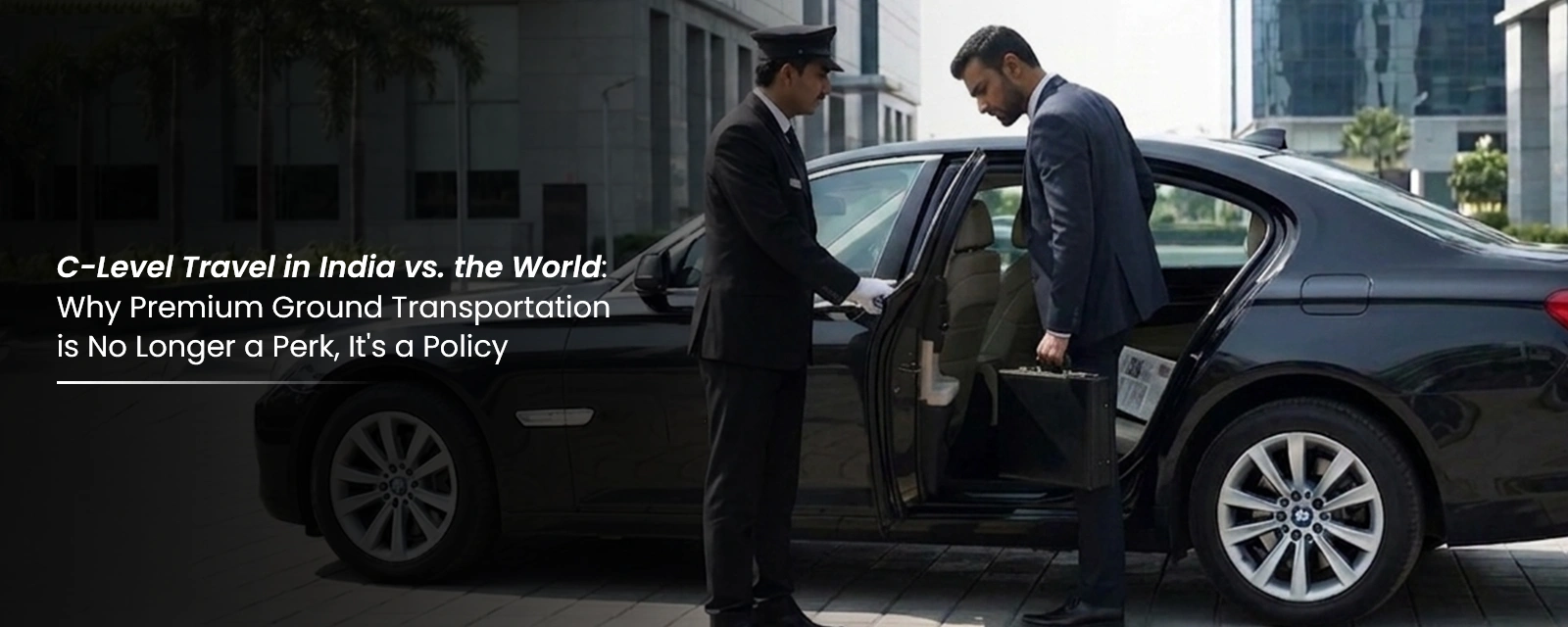
Compare how a Fortune 500 CEO travels on the ground in New York, London, or Singapore to how a lot of Indian companies still arrange executive transport, and there's a gap that's shrinking fast but hasn't fully closed. In most mature markets, dedicated executive ground transport isn't discussed as a perk anymore. It's simply built into duty-of-care and operational policy, the same way travel insurance or corporate laptops are.
India is catching up quickly, but a surprising number of companies still treat premium executive transport as a discretionary nice-to-have rather than a formal policy line item. That gap is starting to matter.
Calling executive car service a perk suggests it's about comfort or status, something that could reasonably be cut in a cost-conscious quarter. That framing misses what's actually driving adoption globally: risk management and duty of care.
A Luxury Cab Company used for C-level travel isn't primarily about impressing anyone. It's about ensuring senior leaders, who carry disproportionate institutional knowledge and decision-making authority, aren't exposed to unnecessary risk from unreliable, unverified, or poorly maintained transport. When you frame it this way, cutting it starts to look less like cost discipline and more like risk tolerance nobody explicitly signed off on.
International companies operating in India increasingly bring their home-market travel policies with them, and the difference is instructive. They typically specify a minimum vehicle standard for C-level and VIP travel, not left to whoever's available. They mandate background-verified, trained chauffeurs as policy, not preference. They build in duty-of-care provisions, real-time tracking, emergency contacts, and defined escalation paths, treated as standard rather than premium add-ons. And they budget for this explicitly as a fixed line item rather than approving it case by case, which tends to produce inconsistent standards across trips.
Without a clear policy, executive transport quality tends to vary wildly based on whoever's booking it that week, an assistant working from limited local knowledge, a regional office defaulting to whatever local vendor they've always used, or worse, an executive booking a general ride-hailing app because nobody set up a proper account in advance.
This inconsistency creates exactly the kind of risk exposure that corporate travel companies in delhi and across India are increasingly being asked to help formalize away. A single bad experience, a car breakdown on a highway, an unverified driver, a vehicle without proper insurance, can escalate from an inconvenience into a genuine safety and liability issue fast.
Companies moving toward formal policy typically define a few things clearly. A minimum vehicle tier for C-level and VIP guest travel (specific models or categories, not vague "premium" language). A designated vendor or short list of pre-approved vendors, removing ad hoc booking discretion. Mandatory features: GPS tracking, verified in-house chauffeurs, 24x7 support, and full insurance coverage. And a clear process for booking, whether that's a dedicated travel desk, an app, or a named account manager.
Corporate travel services built around this kind of policy consistency remove the guesswork for whoever's coordinating a given trip, whether that's an assistant, a regional office, or the executive themselves booking last minute.
IP Travel Lines has increasingly worked with Indian and multinational companies formalizing exactly this kind of executive travel policy, providing a consistent fleet (90 percent newer vehicles), fully in-house trained chauffeurs, transparent contract pricing, and full insurance coverage across 24 Indian cities, the kind of standardization that makes a formal policy actually enforceable rather than aspirational.
More Indian companies are moving this direction each year, partly driven by multinational parent companies extending global standards locally, and partly by a growing recognition that the reputational and safety risks of inconsistent executive transport outweigh whatever savings come from leaving it unstructured.
Treating premium ground transportation as policy rather than perk isn't really about spending more. It's about spending consistently and deliberately, on the travel of the people whose time and safety matter most to the company's continuity.
Quick Booking Form
An in-house fleet costs more upfront and carries direct legal liability for acci...
previous post
Learn how corporate transportation improves employee night shift safety in India...
next postBecause inconsistent, unverified transport creates real duty-of-care and reputational risk. Formal policy ensures every executive trip meets the same safety and quality standard, regardless of who books it.
A defined minimum vehicle tier, a pre-approved vendor list, mandatory GPS tracking and verified chauffeurs, full insurance requirements, and a clear, consistent booking process.
IP Travel Lines offers a standardized fleet, in-house trained chauffeurs, transparent pricing, and full insurance coverage across 24 cities, making consistent policy enforcement realistic rather than aspirational.
No. Indian companies of any size with frequent executive or VIP travel benefit from formalizing this, since ad hoc booking tends to produce inconsistent quality and unmanaged risk exposure.
Not necessarily. It's more about consistent, deliberate spending on a known standard rather than variable ad hoc bookings, which can actually simplify budgeting over time.
 18 Sep 2026 | by IP Travels Lines
How to Book Reliable Cabs for Visiting F...
Booking transport for a visiting foreign delegate or board member carries more moving parts than a r...
Read Full Blog
17 Sep 2026 | by IP Travels Lines
In-House Company Fleet vs Outsourced Cor...
An in-house fleet costs more upfront and carries direct legal liability for accidents, maintenance f...
Read Full Blog 16 Sep 2026 | by IP Travels Lines
What Makes a Cab Service "VIP-Ready": Ch...
Plenty of companies advertise themselves as the best corporate cab company in delhi ncr, but the phr...
Read Full BlogSeamless Travel Solutions for Your Business. Let's Connect.



Seamless Travel Solutions for Your Business. Let's Connect.
Seamless Travel Solutions for Your Business. Let's Connect.